The agarbatti (incense stick) industry is one of the most popular small-scale manufacturing businesses in India. Agarbatti is used daily in homes, temples, offices, and religious ceremonies, creating consistent demand throughout the year. With relatively low investment requirements and strong market demand, many entrepreneurs are exploring the agarbatti business as a profitable venture.
But the most common question remains: What is the profit margin in the agarbatti business in India?
The answer depends on factors such as production scale, product quality, branding, distribution channels, and whether you manufacture or simply trade agarbatti products.
In this guide, we will break down the profit margins, costs, investment requirements, and practical strategies to maximize earnings.
Why the Agarbatti Business Remains Popular in India
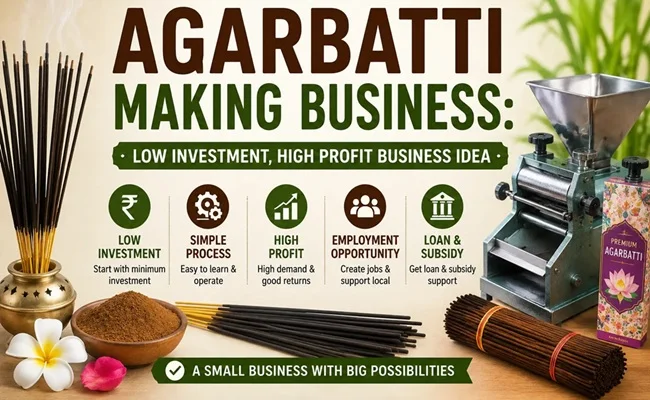
India is one of the world’s largest producers and consumers of incense sticks. Apart from domestic consumption, Indian agarbatti products are exported to many countries.
Key reasons behind the industry’s growth include:
- Daily religious and spiritual use
- Rising demand for premium fragrances
- Growth in online sales
- Increasing exports
- Low entry barriers for new entrepreneurs
- Government support for MSMEs
Since agarbatti is considered a recurring-use product, businesses often enjoy repeat customers.
Understanding Agarbatti Business Models
Before discussing profit margins, it is important to understand different business models.
- Agarbatti Trading Business
In this model, you purchase finished agarbatti products from manufacturers and sell them to retailers or customers.
Investment: ₹50,000 to ₹5 lakh
- Agarbatti Packaging Business
You buy bulk agarbatti, package it under your own brand, and sell it.
Investment: ₹1 lakh to ₹10 lakh
- Agarbatti Manufacturing Business
You produce incense sticks from raw materials and sell them wholesale or retail.
Investment: ₹2 lakh to ₹25 lakh+
- Premium Branded Agarbatti Business
Focuses on luxury fragrances, herbal incense sticks, and premium packaging.
Investment: ₹5 lakh to ₹50 lakh+
Average Profit Margin in Agarbatti Business
Profit margins vary based on the business model.
| Business Type | Average Profit Margin |
| Trading | 10% – 20% |
| Packaging | 20% – 35% |
| Manufacturing | 25% – 45% |
| Premium Branded Products | 40% – 60% |
Manufacturing and branding generally provide higher margins because there are fewer intermediaries.
Cost Structure of Agarbatti Manufacturing
Understanding costs helps estimate actual profits.
Raw Materials Required
- Bamboo sticks
- Charcoal powder
- Jigat powder
- Fragrance oils
- Essential oils
- Packaging materials
Monthly Cost Example
| Expense | Monthly Cost (Approx.) |
| Raw Materials | ₹50,000 |
| Labor | ₹20,000 |
| Rent | ₹10,000 |
| Electricity | ₹5,000 |
| Packaging | ₹10,000 |
| Transportation | ₹5,000 |
| Miscellaneous | ₹5,000 |
| Total Cost | ₹1,05,000 |
Example: Small-Scale Agarbatti Business Profit Calculation
Let’s assume a small unit manufactures agarbatti worth ₹2 lakh per month.
| Particulars | Amount |
| Monthly Sales | ₹2,00,000 |
| Total Expenses | ₹1,20,000 |
| Net Profit | ₹80,000 |
Profit Margin Formula
Profit Margin = (Net Profit ÷ Revenue) × 100
In this example:
₹80,000 ÷ ₹2,00,000 × 100 = 40% Profit Margin
Actual results vary based on market conditions and operational efficiency.
Factors Affecting Profit Margin
Product Quality
Higher-quality fragrances command better prices and customer loyalty.
Packaging
Premium packaging allows businesses to charge higher prices.
Distribution Network
Direct sales usually generate better margins than selling through multiple distributors.
Raw Material Costs
Fluctuations in bamboo, fragrance oils, and packaging materials affect profitability.
Brand Recognition
Well-known brands often achieve significantly higher margins.
Retail vs Wholesale Profit Margin
Many entrepreneurs wonder whether retail or wholesale offers better returns.
| Category | Wholesale | Retail |
| Sales Volume | High | Medium |
| Profit Per Unit | Lower | Higher |
| Marketing Cost | Low | Higher |
| Customer Interaction | Limited | High |
| Profit Margin | 15-30% | 30-60% |
Retail sales generally provide higher margins, while wholesale offers faster volume growth.
Investment Required to Start an Agarbatti Business
Manual Production Setup
| Scale | Investment |
| Home-Based | ₹50,000 – ₹1 lakh |
| Small Unit | ₹1 lakh – ₹5 lakh |
| Medium Unit | ₹5 lakh – ₹15 lakh |
Automatic Machine Setup
| Scale | Investment |
| Semi-Automatic | ₹2 lakh – ₹8 lakh |
| Fully Automatic | ₹10 lakh – ₹30 lakh+ |
Automation can increase production capacity and reduce labor costs over time.
Best-Selling Agarbatti Categories
Traditional Agarbatti
Popular among households and temples.
Sandalwood Agarbatti
Premium segment with strong demand.
Rose Fragrance Agarbatti
Widely used across India.
Herbal Agarbatti
Growing due to eco-friendly preferences.
Charcoal-Free Agarbatti
Increasingly popular among health-conscious consumers.
Luxury Incense Sticks
Higher profit margins due to premium pricing.
How to Increase Profit Margin
Source Raw Materials Directly
Buying directly from suppliers reduces production costs.
Create Your Own Brand
Private labeling can significantly increase margins.
Sell Online
E-commerce helps eliminate intermediaries.
Introduce Premium Variants
Luxury fragrances often provide better profitability.
Improve Packaging
Attractive packaging improves perceived value.
Focus on Repeat Customers
Subscription and bulk orders create predictable revenue.
Is Agarbatti Export Business Profitable?
Yes. Exporting incense sticks can be highly profitable due to demand from:
- United States
- United Kingdom
- Canada
- Australia
- Middle East
- Southeast Asia
Export margins often exceed domestic margins because premium Indian incense products are valued internationally.
Challenges in the Agarbatti Business
Intense Competition
Numerous local and national brands operate in the market.
Price Sensitivity
Many customers compare products based on price.
Raw Material Price Fluctuation
Changes in input costs can reduce margins.
Distribution Challenges
Reaching retailers in multiple regions requires strong logistics.
Brand Building Costs
Marketing expenses can initially reduce profitability.
Future of the Agarbatti Industry in India
Several trends are shaping the future of the industry:
- Growth of premium incense products
- Rising exports
- Increasing demand for natural fragrances
- Expansion of online sales channels
- Growth in herbal and organic categories
Entrepreneurs who focus on product differentiation and branding are likely to benefit the most.
FAQs
Is agarbatti business profitable in India?
Yes. Depending on the business model, profit margins typically range from 10% to 60%. Manufacturing and branded products generally offer higher profitability.
How much can a small agarbatti business earn per month?
A small unit can potentially earn ₹20,000 to ₹1 lakh or more per month depending on production capacity, sales volume, and market reach.
Which agarbatti has the highest profit margin?
Premium sandalwood, herbal, organic, and luxury fragrance agarbatti products often generate the highest margins.
Can I start an agarbatti business from home?
Yes. Many entrepreneurs begin with home-based production and gradually scale up as demand increases.
What is the minimum investment required?
A basic home-based setup can start with approximately ₹50,000 to ₹1 lakh.
Is government support available?
Yes. MSME schemes, Mudra loans, and various state government initiatives may support eligible small manufacturing businesses.
Conclusion
The agarbatti business continues to be one of India’s most attractive small-scale manufacturing opportunities. With steady demand, relatively low startup costs, and the possibility of earning 10% to 60% profit margins, it offers significant potential for entrepreneurs.
For long-term success, focus on quality fragrances, attractive packaging, efficient production, and building a recognizable brand. While trading can generate quick income, manufacturing and premium branding generally provide the highest profit margins and sustainable growth opportunities.
Entrepreneurs who combine traditional demand with modern marketing and online sales channels can build a highly profitable agarbatti business in India.
Leave a Reply