India’s renewable energy sector is growing at an unprecedented pace, and solar energy is at the center of this transformation. Rising electricity costs, government incentives, increasing environmental awareness, and ambitious renewable energy targets have created a huge demand for solar panels across residential, commercial, industrial, and agricultural sectors.
This growing demand has opened up lucrative opportunities for entrepreneurs interested in the solar panel distribution business. Unlike manufacturing, distribution requires lower investment and technical expertise while offering significant growth potential.
If you are planning to enter the renewable energy industry, this guide will help you understand how to start a solar panel distribution business in India, including investment requirements, profit margins, licensing, supplier selection, and growth strategies.
What is a Solar Panel Distribution Business?
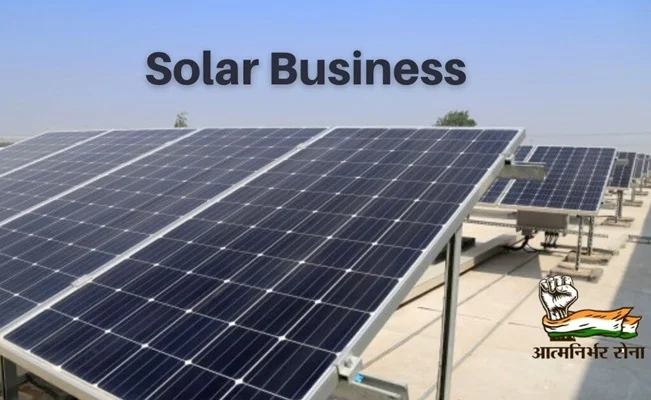
A solar panel distributor acts as a link between solar manufacturers and installers, dealers, EPC contractors, retailers, and end customers.
Distributors purchase solar products in bulk and supply them to:
- Solar installation companies
- Dealers
- Retailers
- EPC contractors
- Commercial projects
- Government projects
- Residential installers
The business focuses on product supply, inventory management, and distribution rather than manufacturing.
Why Start a Solar Panel Distribution Business?
Several factors are making solar distribution one of the most promising business opportunities in India.
Rapid Growth of Solar Energy
Solar adoption is increasing across homes, industries, and farms.
Government Support
Multiple subsidy programs encourage solar installations.
Increasing Electricity Costs
Consumers are looking for long-term savings through solar power.
Expanding Commercial Demand
Businesses are investing in rooftop solar systems to reduce operational costs.
Growing Rural Adoption
Solar pumps and off-grid systems are creating opportunities in rural markets.
Understanding the Solar Industry Supply Chain
A distributor plays a crucial role in the solar ecosystem.
Solar Supply Chain
Manufacturers → Distributors → Dealers/EPC Companies → Customers
Distributors help ensure product availability and efficient logistics.
Products You Can Distribute
Many entrepreneurs assume solar distribution only involves solar panels, but several related products are also in demand.
Solar Panels
The primary product category.
Types
- Monocrystalline panels
- Polycrystalline panels
- Bifacial solar panels
- TOPCon solar panels
Solar Inverters
Convert solar-generated electricity into usable power.
Categories
- String inverters
- Hybrid inverters
- Micro inverters
Solar Batteries
Used for energy storage systems.
Popular Options
- Lithium-ion batteries
- Tubular batteries
- Gel batteries
Mounting Structures
Required for rooftop and ground-mounted installations.
Solar Cables and Accessories
Include:
- DC cables
- Connectors
- Junction boxes
- Protection devices
Distributors offering complete solutions often attract more customers.
Business Models Available
Authorized Distributor
Partner directly with solar manufacturers.
Benefits
- Better pricing
- Brand credibility
- Technical support
Regional Distributor
Operate within a specific territory.
Benefits
- Reduced competition
- Strong dealer network
Multi-Brand Distributor
Supply products from multiple manufacturers.
Benefits
- Wider product range
- Lower dependence on a single supplier
Project-Based Distribution
Focus on supplying commercial and industrial projects.
Benefits
- Larger order values
- Higher revenue potential
Comparison of Solar Distribution Models
| Business Model | Investment | Revenue Potential | Complexity |
| Authorized Distributor | Medium | High | Moderate |
| Regional Distributor | Medium | High | Moderate |
| Multi-Brand Distributor | Medium to High | Very High | Moderate |
| Project Supplier | High | Very High | High |
Investment Required
Investment depends on inventory levels and territory coverage.
Small-Scale Distribution
| Expense | Estimated Cost |
| Inventory | ₹5 lakh – ₹20 lakh |
| Warehouse | ₹1 lakh – ₹5 lakh |
| Registration & Compliance | ₹20,000 – ₹1 lakh |
| Marketing | ₹50,000 – ₹2 lakh |
| Working Capital | ₹2 lakh – ₹10 lakh |
Total Investment
₹10 lakh to ₹40 lakh approximately.
Medium and Large Distribution Business
Investment may range from ₹50 lakh to several crores depending on inventory and project size.
Choosing the Right Solar Products
Not all products offer the same demand or margins.
High-Demand Products in India
| Product | Demand Level |
| Monocrystalline Panels | Very High |
| Hybrid Inverters | High |
| Lithium Batteries | High |
| Solar Pumps | High |
| Rooftop Solar Kits | Very High |
| Commercial Solar Components | High |
Market demand should guide inventory decisions.
Finding Reliable Manufacturers
Supplier selection is one of the most important business decisions.
Selection Criteria
- Product quality
- Certifications
- Warranty support
- Pricing structure
- Delivery capability
- Technical assistance
Long-term supplier relationships improve business stability.
Warehouse and Logistics Requirements
Solar panels require careful storage and transportation.
Warehouse Features
- Covered storage area
- Secure environment
- Easy loading and unloading
- Proper inventory management
Logistics Considerations
- Fragile product handling
- Insurance coverage
- Timely deliveries
Efficient logistics can become a competitive advantage.
Licenses and Registrations
GST Registration
Required for business operations.
Udyam Registration
Provides MSME benefits.
Trade License
May be required depending on local regulations.
Import Export Code (IEC)
Necessary if importing solar products.
Company Registration
Choose an appropriate structure such as:
- Proprietorship
- Partnership
- LLP
- Private Limited Company
Profit Margin in Solar Panel Distribution
Margins vary depending on product type, brand, and sales volume.
| Product Category | Approximate Margin |
| Solar Panels | 5% – 15% |
| Solar Inverters | 10% – 20% |
| Solar Batteries | 10% – 25% |
| Mounting Structures | 10% – 20% |
| Accessories | 15% – 30% |
While solar panels themselves may have relatively lower margins, distributors often increase profitability through complementary products and services.
Revenue Potential
Consider a distributor supplying solar products worth ₹50 lakh per month.
| Particulars | Amount |
| Monthly Sales | ₹50,00,000 |
| Average Margin | 10% |
| Gross Profit | ₹5,00,000 |
| Expenses | ₹2,00,000 |
| Net Profit | ₹3,00,000 |
Actual profitability depends on product mix, volume, and operating efficiency.
Building a Customer Network
Success in distribution depends on strong relationships.
Target Customers
Solar Installers
Regular buyers of panels and components.
EPC Companies
Large-volume purchasers for commercial projects.
Dealers
Important for regional expansion.
Agricultural Sector
Solar pumps and irrigation systems offer growing opportunities.
Commercial Businesses
Factories, warehouses, and offices increasingly adopt solar energy.
Marketing Strategies
Build a Professional Website
Showcase:
- Product portfolio
- Certifications
- Warranty information
- Dealer opportunities
Digital Marketing
Generate leads through:
- Search engine optimization (SEO)
- Google Ads
- LinkedIn marketing
- Social media
Participate in Trade Exhibitions
Renewable energy exhibitions help connect with buyers and manufacturers.
Dealer Development Programs
Offer:
- Technical training
- Marketing support
- Dealer incentives
Strong dealer relationships drive long-term growth.
Challenges in the Solar Distribution Business
Price Fluctuations
Global solar module prices can change significantly.
Solution
Maintain flexible inventory strategies.
Competition
The industry is becoming increasingly competitive.
Solution
Focus on service quality and technical support.
Technology Changes
New technologies emerge regularly.
Solution
Stay updated with industry developments.
Working Capital Requirements
Large inventory can require significant capital.
Solution
Manage cash flow carefully and negotiate supplier credit.
Future Opportunities
Several segments are expected to grow rapidly.
Residential Rooftop Solar
Government support continues to drive adoption.
Solar Pumps
Growing demand in agriculture.
Energy Storage Solutions
Battery demand is increasing.
Commercial and Industrial Solar
Businesses continue investing in renewable energy.
EV Charging Infrastructure
Solar-powered charging solutions are emerging as a promising market.
Tips for Success
Choose Reliable Brands
Quality products reduce warranty issues.
Build Technical Knowledge
Understanding solar technology improves customer trust.
Diversify Product Range
Offer complete solar solutions.
Focus on Customer Service
Fast deliveries and support encourage repeat business.
Maintain Inventory Discipline
Avoid overstocking slow-moving products.
Develop Long-Term Partnerships
Strong relationships with manufacturers and installers create sustainable growth.
Frequently Asked Questions (FAQs)
Is the solar panel distribution business profitable in India?
Yes. Growing solar adoption, government support, and increasing energy costs are creating strong opportunities for distributors.
How much investment is required?
A small distribution business may require ₹10 lakh to ₹40 lakh, while larger operations can need significantly more capital.
What is the average profit margin?
Margins typically range from 5% to 30%, depending on the product category and sales volume.
Do I need technical knowledge?
Basic understanding of solar products is highly beneficial, although advanced engineering expertise is not always necessary.
Can I become an authorized distributor?
Yes. Many solar manufacturers appoint regional and state-level distributors based on business capacity and market potential.
Which products provide the highest margins?
Solar batteries, accessories, mounting structures, and value-added solutions often offer higher margins than solar panels alone.
Conclusion
The solar panel distribution business is one of the most promising opportunities in India’s renewable energy sector. As residential, commercial, agricultural, and industrial users increasingly adopt solar power, the demand for reliable distributors continues to grow.
Although solar panels may offer relatively modest margins, a diversified portfolio that includes inverters, batteries, mounting structures, and accessories can create strong profitability. Entrepreneurs who focus on quality products, technical knowledge, customer relationships, and efficient logistics can build a scalable and future-ready business in India’s rapidly expanding solar energy market.
Leave a Reply