India is one of the world’s largest producers of coconuts, making coconut processing a promising business opportunity for entrepreneurs. From coconut oil and virgin coconut oil to coconut water, desiccated coconut powder, coconut chips, and coir products, there are multiple ways to generate revenue from a single coconut.
As consumer demand for natural, healthy, and plant-based products continues to rise, the coconut processing industry is witnessing significant growth. Whether you are a farmer, startup founder, or small business owner, this guide will help you understand how to start a coconut processing business in India.
What is a Coconut Processing Business?
A coconut processing business involves converting raw coconuts into value-added products for retail, industrial, or export markets.
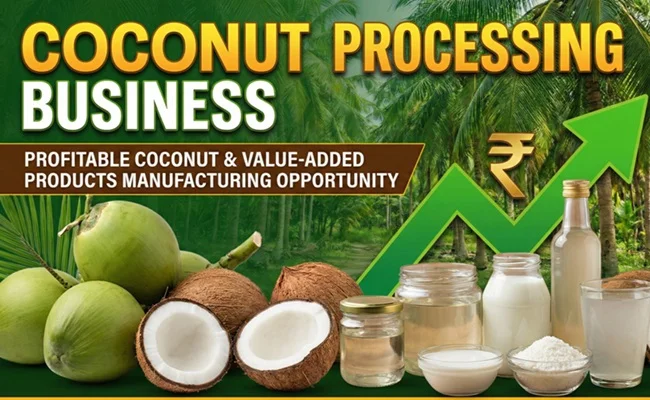
Instead of selling raw coconuts at lower margins, businesses process them into products that command higher prices and better profits.
Popular Coconut-Based Products
- Coconut oil
- Virgin coconut oil
- Coconut water
- Desiccated coconut powder
- Coconut milk
- Coconut cream
- Coconut chips
- Coconut sugar
- Coir fiber
- Coir pith
- Coconut shell handicrafts
- Activated carbon from coconut shells
The advantage of coconut processing is that nearly every part of the coconut can be utilized.
Why Start a Coconut Processing Business in India?
Several factors make this industry attractive.
Abundant Raw Material
India is among the top coconut-producing countries globally.
Growing Health Awareness
Consumers are increasingly choosing natural and plant-based products.
Export Opportunities
Indian coconut products have strong demand in international markets.
Government Support
Various MSME and food processing schemes support entrepreneurs.
Multiple Revenue Streams
One coconut can generate income through several by-products.
Major Coconut-Producing States in India
The location of your business can significantly affect procurement costs.
| State | Coconut Production Strength |
| Kerala | Highest production and processing ecosystem |
| Tamil Nadu | Large commercial cultivation |
| Karnataka | Strong supply chain |
| Andhra Pradesh | Rapidly growing production |
| Telangana | Emerging coconut market |
| Goa | Niche processing opportunities |
| Odisha | Increasing cultivation area |
Businesses located near production centers often enjoy lower transportation costs.
Best Coconut Processing Business Ideas
- Coconut Oil Manufacturing
Coconut oil remains one of the most popular coconut-derived products.
Market Demand
- Cooking oil
- Hair care products
- Cosmetics industry
- Ayurvedic products
Investment
₹5 lakh to ₹50 lakh depending on scale.
- Virgin Coconut Oil Production
Virgin coconut oil (VCO) is a premium product extracted without high heat processing.
Benefits
- Higher profit margins
- Growing health-conscious customer base
- Export potential
Selling Price Advantage
Virgin coconut oil often sells at 2-4 times the price of regular coconut oil.
- Coconut Water Processing
Packaged coconut water is gaining popularity among urban consumers.
Customers
- Fitness enthusiasts
- Health-conscious consumers
- Retail chains
- Hotels and restaurants
Investment
Medium to high due to processing and packaging requirements.
- Desiccated Coconut Powder
This product is widely used in:
- Bakeries
- Confectionery
- Food processing industries
- Restaurants
Demand remains strong throughout the year.
- Coconut Chips Manufacturing
Healthy snacking trends have increased demand for coconut chips.
Opportunity
Premium branding can significantly improve profit margins.
- Coir Product Manufacturing
Coir is extracted from coconut husks and used in:
- Mattresses
- Ropes
- Door mats
- Gardening products
- Geo-textiles
This segment also offers export opportunities.
Business Models Comparison
| Business Type | Investment | Profit Potential | Complexity |
| Coconut Oil | Medium | High | Moderate |
| Virgin Coconut Oil | Medium | Very High | Moderate |
| Coconut Water | High | High | High |
| Desiccated Coconut | Medium | Good | Moderate |
| Coconut Chips | Medium | High | Moderate |
| Coir Products | Medium | High | Moderate |
Market Potential in India
The coconut industry is benefiting from several consumer trends.
Key Growth Drivers
- Rising demand for natural foods
- Expansion of organic product markets
- Growth in e-commerce
- Increasing export demand
- Popularity of vegan products
- Growth in health and wellness sectors
Products such as virgin coconut oil and coconut water are experiencing particularly strong growth.
Investment Required
Investment depends on product selection and production scale.
Small-Scale Unit
| Expense | Approximate Cost |
| Machinery | ₹2 lakh – ₹10 lakh |
| Raw Material | ₹1 lakh – ₹3 lakh |
| Packaging | ₹50,000 – ₹2 lakh |
| Licenses | ₹20,000 – ₹1 lakh |
| Working Capital | ₹1 lakh – ₹5 lakh |
Medium-Scale Unit
Investment can range between ₹15 lakh and ₹1 crore depending on automation levels.
Machinery Required
The machinery varies based on products being manufactured.
For Coconut Oil
- Copra cutter
- Oil expeller
- Filter press
- Storage tanks
- Filling machine
For Desiccated Coconut
- Dehusking machine
- Washing system
- Drying machine
- Pulverizer
- Packaging machine
For Coir Products
- Fiber extraction machine
- Twisting machine
- Baling equipment
Automation improves productivity and consistency.
Licenses and Registrations Required
FSSAI License
Mandatory for food-related coconut products.
GST Registration
Required for eligible businesses.
Udyam Registration
Helps access MSME benefits.
Factory License
May be required depending on scale and location.
Pollution Control Approvals
Applicable in some manufacturing setups.
Import Export Code (IEC)
Required for export activities.
Raw Material Procurement
A stable supply chain is critical.
Sources
- Coconut farmers
- Farmer Producer Organizations (FPOs)
- Agricultural cooperatives
- Wholesale markets
- Contract farming arrangements
Long-term procurement agreements can help maintain stable pricing.
Profit Margin in Coconut Processing Business
Profitability depends on the product category.
| Product | Approximate Profit Margin |
| Coconut Oil | 15% – 30% |
| Virgin Coconut Oil | 25% – 50% |
| Coconut Chips | 30% – 50% |
| Desiccated Coconut | 15% – 35% |
| Coir Products | 20% – 40% |
| Activated Carbon | 25% – 50% |
Value-added products generally deliver better margins than raw coconut sales.
Marketing Strategies
Build a Strong Brand
Consumers increasingly prefer trusted brands in food products.
Sell Online
Popular channels include:
- Own website
- E-commerce marketplaces
- Social commerce
Target B2B Buyers
Sell directly to:
- Food manufacturers
- Bakeries
- Hotels
- Cosmetic companies
Focus on Health Benefits
Products like virgin coconut oil and coconut water benefit from health-oriented marketing.
Export Opportunities
Indian coconut products are exported to:
- United States
- Canada
- United Kingdom
- Germany
- Australia
- United Arab Emirates
- Singapore
High-Demand Export Products
- Virgin coconut oil
- Desiccated coconut powder
- Coconut milk powder
- Coir products
- Activated carbon
Export markets often provide higher profit margins.
Challenges in the Coconut Processing Industry
Raw Material Price Fluctuation
Seasonal variations can impact costs.
Quality Standards
Food products require strict quality control.
Competition
Both local and international brands compete in premium categories.
Storage and Shelf Life
Proper packaging is necessary for product stability.
Logistics Costs
Transportation can affect profitability.
Tips for Success
Start with One Product
Focus on mastering one product before diversification.
Prioritize Quality
Premium quality helps build long-term customer loyalty.
Invest in Packaging
Packaging strongly influences consumer perception.
Develop Multiple Sales Channels
Avoid dependence on a single customer group.
Explore Export Markets
Exports can significantly improve profitability.
Utilize By-Products
Generate additional revenue from husks, shells, and coir.
Future of Coconut Processing in India
The future looks promising due to:
- Growing health-conscious consumer base
- Increased demand for plant-based products
- Expansion of the wellness industry
- Government focus on food processing
- Rising exports of value-added coconut products
Businesses that focus on innovation, quality, and branding are likely to see strong growth over the next decade.
Frequently Asked Questions (FAQs)
Is coconut processing a profitable business in India?
Yes. Value-added products such as virgin coconut oil, coconut chips, and coir products can offer attractive profit margins and growing market demand.
How much investment is needed to start a coconut processing business?
A small unit can start with approximately ₹5 lakh to ₹15 lakh, while larger automated units may require ₹50 lakh or more.
Which coconut product is most profitable?
Virgin coconut oil, activated carbon, coconut chips, and premium coir products generally provide higher profit margins.
Can I export coconut products from India?
Yes. Many coconut-based products have strong international demand. An Import Export Code (IEC) is required for exports.
Which state is best for coconut processing?
Kerala, Tamil Nadu, Karnataka, and Andhra Pradesh are among the most favorable states due to strong coconut production and supply chains.
Conclusion
The coconut processing business in India offers excellent opportunities for entrepreneurs seeking to enter the food processing or agro-based manufacturing sector. With abundant raw material availability, rising demand for healthy products, and strong export potential, the industry continues to attract investment.
Whether you choose coconut oil, virgin coconut oil, coconut chips, desiccated coconut, or coir products, success depends on quality, efficient sourcing, branding, and market access. By focusing on value-added products rather than selling raw coconuts, entrepreneurs can build a profitable and scalable business in India’s growing coconut industry.
Leave a Reply